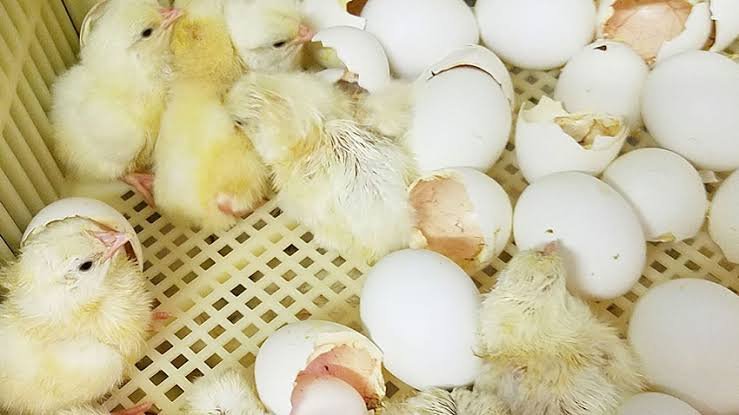
# How to Choose Good Day-Old Chicks for Poultry Farming
Starting a poultry production cycle begins with an important decision: choosing the chicks that will form the foundation of the flock.
The quality of day-old chicks can affect early survival, growth and the overall management of a poultry operation. However, choosing chicks should not be based on appearance alone.
Farmers should consider the source of the chicks, their general condition, transportation arrangements and whether the poultry house is properly prepared before the birds arrive.
## Buy From a Reliable Hatchery or Supplier
One of the first things to consider is where the chicks come from.
Farmers should work with reputable hatcheries or suppliers that can provide clear information about the chicks, including breed or strain, age and relevant health or vaccination information.
Buying from an unknown source simply because the price is lower can create unnecessary risks.
Farmers should ask questions and keep records of where the chicks were purchased.
## Look at the General Condition of the Chicks
Healthy day-old chicks are generally active and responsive.
When inspecting chicks, farmers can observe whether they are alert, moving normally and showing signs of good general condition.
Chicks that appear unusually weak, inactive or poorly coordinated may require further attention before purchase.
Farmers should avoid making decisions based on one characteristic alone. The overall condition of the flock and the reliability of the supplier are also important.
## Check the Eyes
The eyes can provide useful information when assessing the general condition of chicks.
Farmers can look for chicks with clear, open and alert-looking eyes.
Unusual discharge, excessive dullness or other visible abnormalities may be reasons to ask additional questions or seek professional advice before proceeding.
## Examine the Body and Feathers
Chicks should generally have a normal appearance for their age.
Farmers can observe the body, feathers and overall posture for visible abnormalities.
The chicks should not appear excessively weak or poorly developed compared with others in the same batch.
Where farmers are unfamiliar with assessing chicks, professional guidance can be useful.
## Pay Attention to the Legs and Movement
The legs and movement of a chick can provide another indication of its general condition.
Farmers can observe whether chicks stand and walk normally and whether there are obvious problems with the legs or feet.
Chicks that struggle to stand or move normally should be examined carefully before being accepted.
## Ask About Vaccination and Health Information
Farmers should ask the hatchery or supplier for relevant health information.
Depending on the production system and location, vaccination programmes can vary.
It is therefore useful to know what has already been done and what health management is expected after the chicks arrive on the farm.
Farmers should keep records and work with qualified veterinary professionals when developing an appropriate poultry health programme.
## Consider the Breed or Strain
Different poultry breeds and commercial strains can be selected for different production purposes.
A farmer interested in table eggs may have different requirements from a farmer raising birds for meat.
Before buying chicks, the farmer should understand the production objective and choose birds that are appropriate for that purpose.
## Prepare the Brooding Area Before the Chicks Arrive
Choosing good chicks is only part of the process.
The brooding area should be prepared before the birds arrive.
Farmers should check:
* Cleanliness of the brooding area
* Litter condition
* Availability of clean drinking water
* Feed arrangements
* Appropriate temperature
* Ventilation
* Protection from unnecessary disturbances
* Equipment needed for the number of chicks
Good preparation allows farmers to focus on monitoring the chicks immediately after arrival.
## Plan Transportation Carefully
The journey from the hatchery to the farm can be stressful for young birds.
Transportation should be handled carefully, with attention to ventilation, temperature, overcrowding and unnecessary delays.
Farmers should plan the journey in advance and avoid keeping chicks in transport containers longer than necessary.
## Inspect the Chicks Again After Arrival
Observation should continue after the chicks reach the farm.
Farmers can monitor how the birds behave around the brooder, whether they are drinking and feeding normally and whether there are unusual signs that require attention.
Early observation can help farmers identify problems quickly.
## Keep Good Records
Farm records are useful from the beginning of a production cycle.
Record information such as:
* Date of purchase
* Number of chicks
* Source
* Breed or strain
* Relevant vaccination information
* Initial mortality
* Feed consumption
* Important health observations
These records can help farmers evaluate each production cycle and make better decisions in the future.
## Seek Professional Advice When Necessary
Poultry production involves health, nutrition, housing and management decisions.
Farmers should not rely entirely on informal advice when they encounter serious health concerns.
A qualified veterinary professional or experienced poultry specialist can provide guidance appropriate to the flock and production system.
## Final Thoughts
Choosing good day-old chicks is an important part of starting a poultry production cycle, but it is only one part of successful farm management.
Farmers should consider the reliability of the supplier, general chick condition, health information, production objectives, transportation and the preparation of the brooding environment.
Careful planning from the beginning can make it easier to monitor the flock and respond to problems as they arise.
At Jenfrank Farms, we believe that successful agriculture starts with knowledge, careful preparation and responsible farm management.
Comments
0 commentsBe the first to leave a comment on this article.